
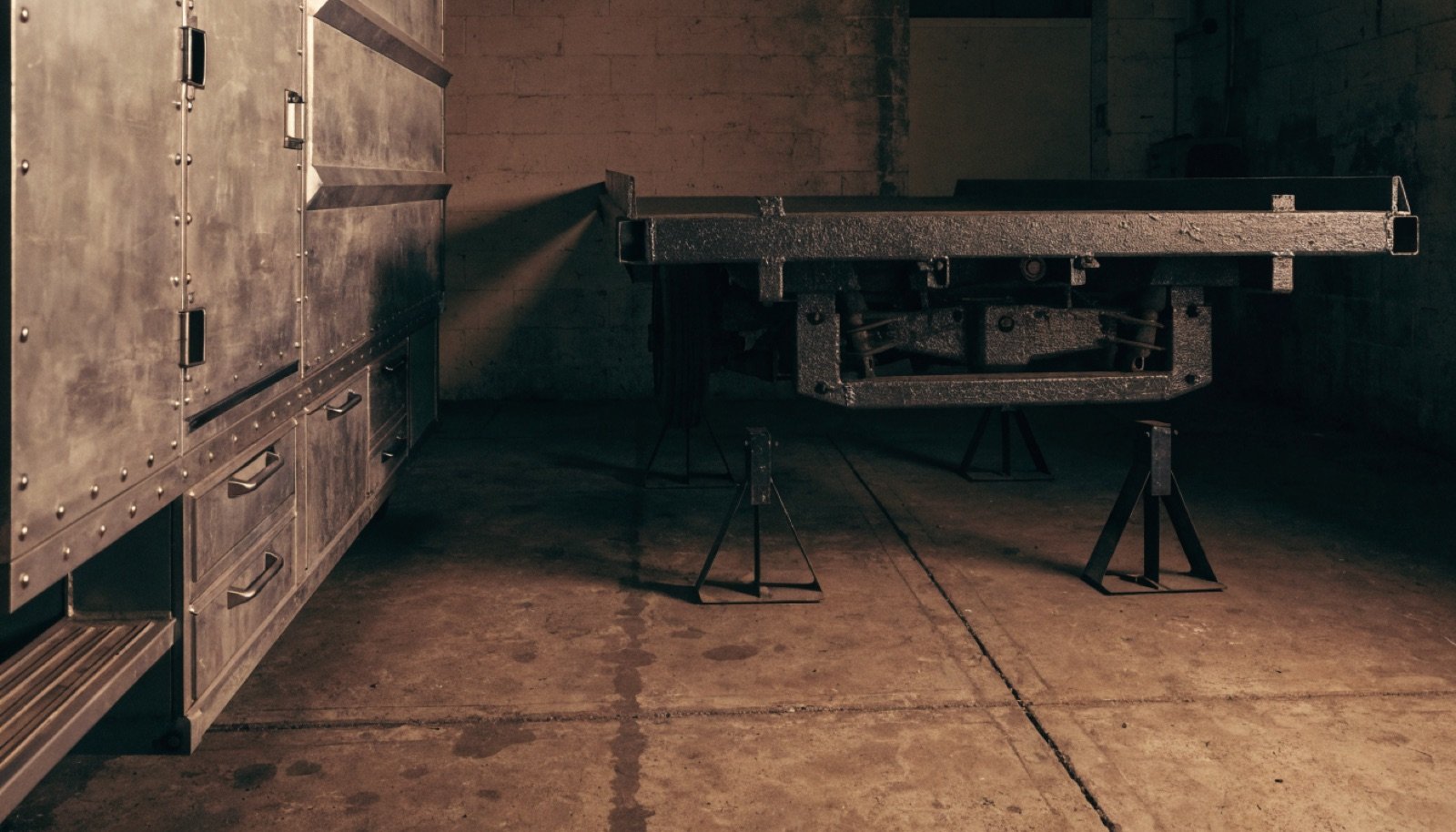
Aluminium or steel service body: the ten year cost
People usually decide this on the sticker price, and the sticker price is the least important part of it. Here is what you actually live with over ten years.
Weight, and what it costs you
A steel service body can weigh several hundred pounds more than the aluminium equivalent. That difference comes straight off your payload for the life of the truck.
If you routinely run near your GVWR, that is not a preference, it is a capacity decision. Several hundred pounds of body is several hundred pounds of tools and stock you cannot carry. If you run light, it matters much less.
Corrosion
Aluminium does not rust. It will oxidise on the surface and it will suffer galvanic corrosion where dissimilar metals meet without isolation, but it does not rot through the way steel does.
Steel is coated, and coatings get broken by stone chips, ladder edges and the general business of a work truck. Where the coating breaks, the salt gets in. On a truck that lives where roads are salted, that is the whole argument.
The place to look on a used steel body is the bottom of every compartment, because that is where water sits.
Repairability
This is where steel wins clearly. Any competent welder can repair a steel body, straighten a bent compartment door frame or patch a floor. It is straightforward, cheap and available anywhere.
Aluminium repair needs the right equipment and somebody who knows how to use it. It is perfectly repairable, but it is not a job the local shop can always take on, and a badly repaired aluminium panel looks bad permanently.
If your truck takes knocks and gets fixed locally, that is a real argument for steel.
Purchase price
Aluminium costs more up front. How much more depends on the size and the manufacturer, and it is the number everybody anchors on.
The honest way to think about it is over the life of the truck. Aluminium buys you payload every day and removes the rot question. Steel buys you a lower entry price and easy repairs. Neither is the right answer for everybody.
What we see come through the yard
Aluminium bodies from salted states arrive used and still structurally fine, with the fittings worn out rather than the body. Steel bodies from the same places arrive with the compartment floors gone.
That is not a sales pitch, it is just what turns up. In dry states the difference is far less pronounced and steel bodies last a long time.
The decision, simplified
Salted roads and near your payload limit: aluminium, almost every time. Dry state, knocks about, repaired locally, price sensitive: steel is fine and sensible.
Whichever you choose, the measurement that decides which one fits is cab to axle, not bed length. Send us that and whether you are single or dual rear wheel, and we will tell you exactly which bodies suit your chassis.




Add comment